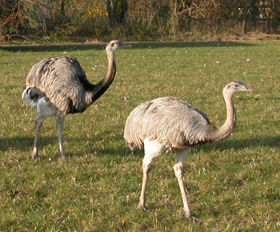
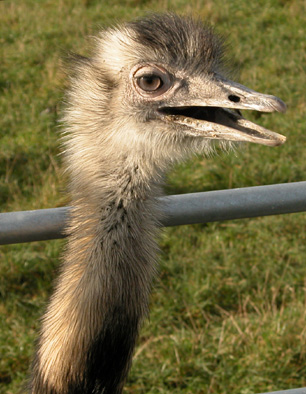
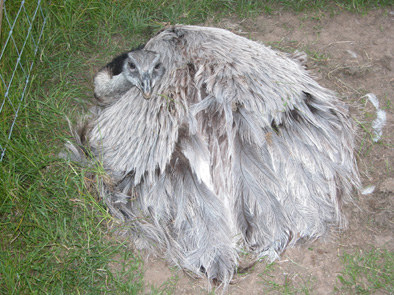
Common Rhea
- Rhea Americana
also known as 'nandu'
Rheas
-
belong to the ratite family of birds along with ostrich, emu,
cassowary and kiwi.
-
are all flightless birds.
-
have large
wings like ostriches, that are used in courtship, mating and
aggressive displays.
-
are
native to South America and are often called the South American
Ostrich because they are very similar although much smaller,
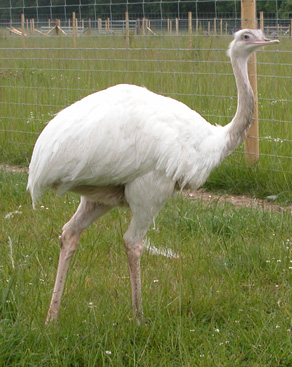
(also smaller than the Emu) adult males being up to 5’
tall.
-
weigh an average 25kg with the males being larger
than the females.
-
come
from the pampas regions of South America. Scattered trees
and shrubs provide them with shelter on the open grasslands. It
is very hot in summer and cold in winter so they are well able
to adapt to the UK climate.
-
are
farmed in the USA and S. America for their meat. The leather,
oil, eggs and feathers also have a lesser market.
-
are being
increasingly farmed in the UK. The market being
mainly livestock and eggs. Meat, leather, feathers and oil
have the potential for development.
-
do not
require a Dangerous Wild Animal licence.
-
can
live up to 40 years.
Feed
They are omnivores, their natural diet is insects, leaves, shoots,
flowers and seeds. They browse on some grasses but it is not their
main diet. Ostrich feed is suitable and is available from some
feed manufacturers. Adults eat about ¾kg per day.
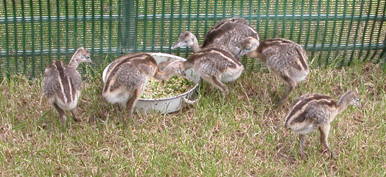
Chicks do need a careful feeding programme up to 3 months to
increase their survival rate.
Housing
They will need secure accommodation while small enough to be taken
by the fox especially at night. When fully grown they prefer to
stay outside sheltering under the shrubs. A three sided shelter is
all that is needed from severe weather conditions. It also helps to
keep the feed dry in wet weather.
Fencing
Stock fencing with 2 strands of plain wire above has been found to
be sufficient for adults although personally I have all my stock
behind a 5’ fence so that I know they are secure. It does not have
to be expensive, I have 2 runs of sheep netting one above the
other. They can jump so make sure the fence line is clear of
objects that can be used as take off points. Chicks will of course
need a closer mesh and ordinary chicken wire will be sufficient for
the very young.
Breeding
Rheas are summer breeders unlike emus that breed in the winter. The
egg laying of both is triggered by length of daylight hours. The
rhea needing longer daylight hours.
The
hen bird usually starts laying in her second summer. The male
scrapes a depression in the soil for a nest and it is he who
incubates the eggs and takes responsibility for the chicks. He will
sit for 35-40 days. Some make very protective fathers but others
show no interest in their chicks. Male aggression is most common
during the breeding season when he will huff, hiss, puff out his
feathers and bite. I have found that some males will continue to
display this behaviour throughout the year. The females are usually
docile. I have not seen any aggressive behaviour from my females.
They can be kept as pairs, trios or groups. They are polygamous, so
the male will mate with and incubate the eggs of many females.
Groups often produce more fertile eggs as when the dominant male
decides to sit, another male will move up the pecking order and mate
with the females.
Eggs
The
eggs, laid every other day, may be yellow when first laid but fade
to a creamy colour in a few days. Mature females can lay between 40
- 60 eggs in a year. Egg laying usually starts around April and can
continue until September. They weigh between 450 - 700 g
Health
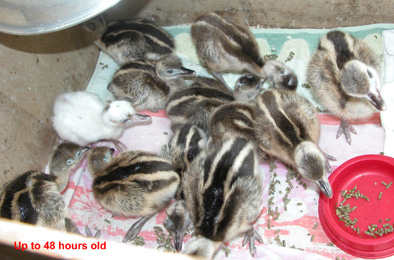
Chicks need to be on heat for maybe up to 6 weeks depending on the
weather. The most vulnerable time for rheas is up to 3 months old.
They can suffer from impaction if put onto grass too soon or for too
long. They are sensitive birds and both chicks and adults can react
strongly to stress.
Should be checked regularly for worms and treated only if needed.
|